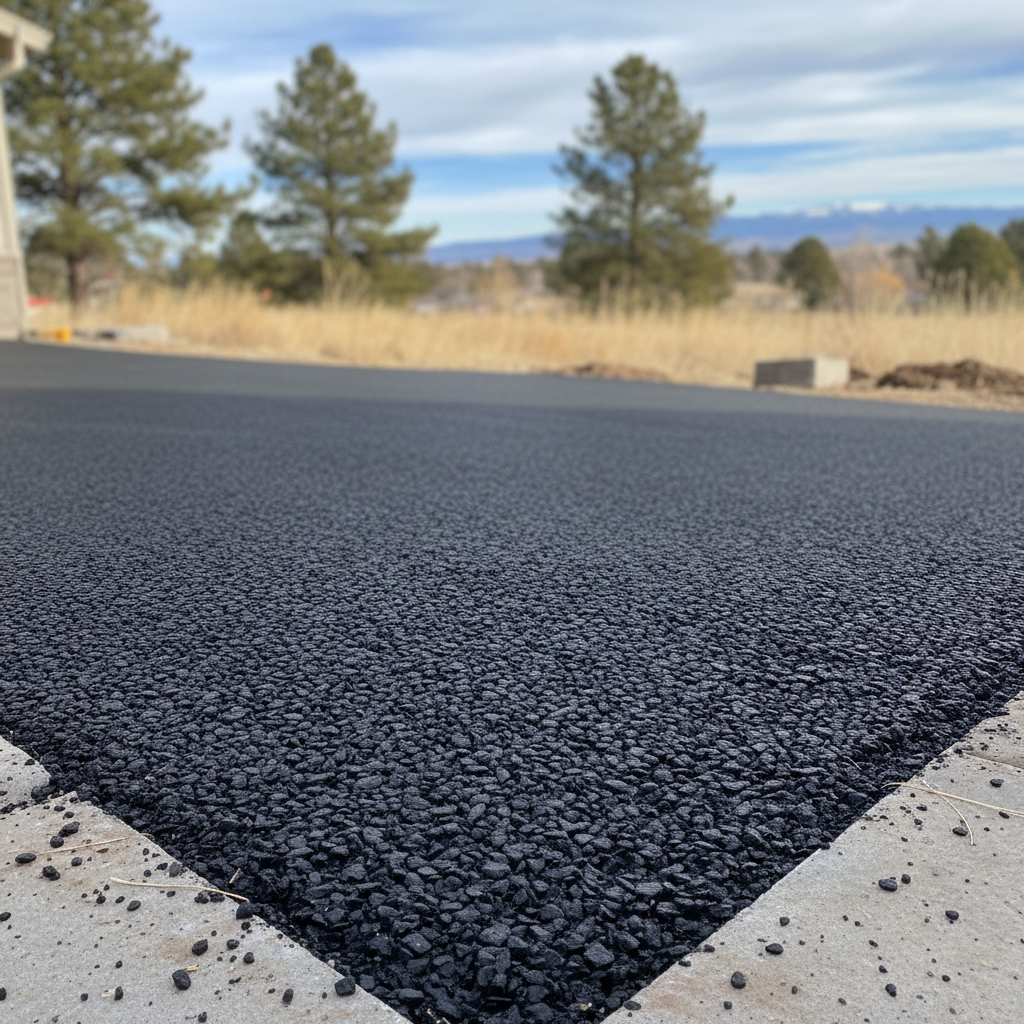
Alright, let's talk about commercial-grade asphalt. Now, most homeowners aren't really thinking about this stuff for their driveways, and usually, residential asphalt is perfectly fine. But sometimes, you've got a unique situation. Maybe you've got an RV pad, or you run a home-based business with clients stopping by, or you just want something that's built to last way longer than the average residential job. You're probably looking for that extra durability, that thicker, tougher surface you see on parking lots or streets, right?
You're not wrong to consider it. Commercial asphalt is designed to handle heavier loads, more frequent traffic, and generally take a bigger beating. But it's not just a matter of 'more is better.' There are specific things you really need to understand before you even think about putting this kind of material down on your property here in Thornton.
Before the Project: Planning for the Long Haul
First off, 'commercial-grade' isn't just one single thing. It actually refers to a whole system. We're talking about the thickness of the asphalt, the blend of aggregates and binders, and — most importantly — the base underneath. For a typical residential driveway, you might see 2-3 inches of asphalt over 4-6 inches of compacted aggregate base. For a commercial job, though, you're looking at 3-5 inches of asphalt and often 6-12 inches of base, sometimes even more, depending on how much weight it's expected to hold.
So, what's your actual need? Are you parking a semi-truck? Or just a couple of heavier SUVs? Be realistic. Over-engineering can cost you a lot of extra money you really don't need to spend. Think about drainage too. Here in Thornton, especially with our clay soils, proper drainage is absolutely critical. You definitely don't want water sitting on your new surface, or worse, getting underneath it and compromising your expensive base. A good contractor will plan for proper grading and possibly even subsurface drainage.
You'll also need to consider local codes. Even if it's your property, there might be regulations about impervious surfaces, setbacks, or drainage plans, especially if you're near a creek or a storm drain. Don't skip this step — a quick call to the City of Thornton's planning department can save you a huge headache down the road. Trust me on this one.
During the Project: What to Look For
When the work starts, you're paying for a professional job, so you want to make sure it's done right. The base is everything. I truly can't stress this enough. If the base isn't properly prepared and compacted, your commercial-grade asphalt will fail just as quickly as a residential one. You should see heavy equipment compacting the base material in layers. It shouldn't just be dumped and smoothed over, no way.
Then comes the asphalt itself. For commercial applications, you'll often see a binder course (that's a coarser mix for strength) followed by a surface course (a finer mix for smoothness and wear). Make sure the asphalt is laid at the right temperature. If it's too cold, it won't compact properly. If it's too hot, it can segregate. A good crew, like the guys at Thornton Paving Co., will have the right equipment and know-how to get this right. You'll also want to see proper compaction with rollers, making sure there are no visible seams or uneven spots.
Don't be afraid to ask questions. A reputable contractor will be happy to explain their process. You're investing a lot of money, after all, so you have every right to understand what's happening.
After the Project: Keeping it Strong
Once your new, tough asphalt is down, it's not something you can just 'set it and forget it.' Even commercial-grade asphalt needs some love. For the first 6-12 months, try to avoid parking heavy vehicles in the exact same spot all the time. The asphalt is still curing and can be more susceptible to rutting. Give it time to fully harden.
You'll want to sealcoat it. For commercial surfaces, I often recommend a more durable, commercial-grade sealcoat product. This isn't just for looks; it protects the asphalt from UV rays, water penetration, and chemical spills. Depending on traffic, you might need to re-seal every 2-4 years. Don't wait until it looks faded and cracked. Be proactive.
Patching is also important. If you see small cracks developing, get them filled quickly. Water is asphalt's worst enemy. It gets into cracks, freezes, expands, and turns small problems into big, expensive ones. While you might be able to fill tiny cracks yourself with a pourable crack filler, for anything larger or more extensive, call a pro. You want a hot-applied crack filler that bonds well and lasts.
For major repairs, like potholes or larger areas of deterioration, that's definitely a job for the experts. They have the equipment to cut out the damaged section, prepare the base, and lay new asphalt that blends seamlessly with the existing surface. Trying to DIY a big patch on a commercial-grade surface usually ends up looking bad and failing quickly.
So, while you can handle some minor crack filling and definitely the sealcoating (if you're up for a big weekend project), for the initial installation and any significant repairs, you're going to want a professional asphalt contractor. It's an investment, and you want it done right so it lasts for decades.