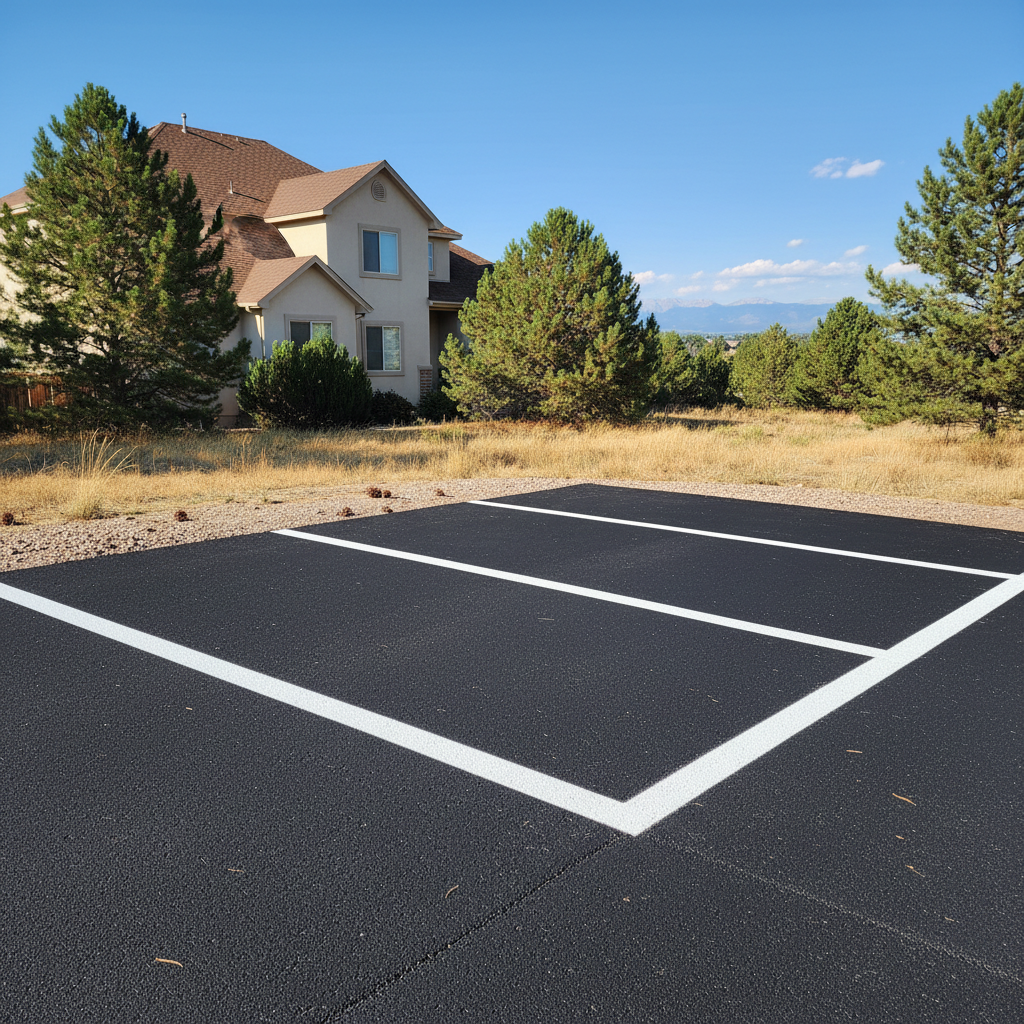
You'd think striping a driveway would be pretty straightforward, right? Just paint some lines. But I've seen enough botched jobs and frustrated homeowners around Thornton to tell you it's not always that simple. There are some common traps folks fall into, and I want to help you steer clear of them. You want your driveway to look good and last, not be a constant reminder of a bad decision.
Mistake #1: Skipping the Prep Work
This is probably the biggest one. People see a faded line and think, "I'll just paint over it." Nope. You wouldn't paint a wall without cleaning it first, would you? Your asphalt is no different. If you're striping over dirt, loose gravel, oil stains, or even old, peeling paint, your new lines won't stick. They'll flake, fade, and look terrible in no time. Especially with our freeze-thaw cycles here in Colorado, any moisture trapped under that new paint will just make it peel faster, believe me.
You really need to clean that surface properly. That means sweeping, power washing, and letting it dry completely. If there are oil spots, you might need a degreaser. And if the old paint is flaking badly, you might even need to scrape or lightly sand it down. It's extra work, sure, but it's the foundation for a job that actually lasts.
Mistake #2: Using the Wrong Type of Paint
I see this all the time. Someone grabs a can of regular house paint or even spray paint from the hardware store. Big mistake. Asphalt striping paint isn't just any old paint. It's specifically made to stick to asphalt, handle vehicle traffic, oil, gas, UV rays, and our crazy Colorado weather. It's designed to be tough and flexible enough to move with the asphalt as it expands and contracts.
Regular paint will crack, fade quickly, and wear off with the first few cars that drive over it. You'll be repainting it every year, which isn't saving you any money or time. Professional-grade acrylic or oil-based traffic paint is what you need. It's got better adhesion and a much longer lifespan.
Mistake #3: Guessing on Layout and Measurements
Ever seen a driveway where the lines are crooked, uneven, or just look...off? That's usually because someone eyeballed it. Even for a simple single-car driveway, you want those lines to be straight and consistent. If you're trying to mark out parking spots or a turnaround, precision becomes even more critical.
Don't just freehand it. Use chalk lines, a measuring tape, and stencils if you need them. Take your time. Step back and look at it from different angles before you start painting. A little planning goes a long way. You want those lines to guide you, not confuse you, right?
Mistake #4: Ignoring the Weather Forecast
This is a big one for us in Thornton. One minute it's sunny, the next there's a surprise hailstorm or a sudden temperature drop. Painting in the wrong conditions is a recipe for disaster. If it's too cold, the paint won't cure properly. If it's too hot, it can dry too fast and not bond well. If it's humid or about to rain, forget about it – your paint will run or wash away.
Always check the forecast. You generally want a dry day with temperatures between 50 and 85 degrees Fahrenheit. Give the paint plenty of time to dry before driving on it, usually 24-48 hours depending on the product. Patience here saves you from having to redo the whole thing.
Mistake #5: Hiring the Cheapest Bid Without Asking Questions
Look, I get it. Everyone wants to save a buck. But when you're getting quotes for asphalt striping, the lowest price isn't always the best deal. Sometimes, it's a red flag. A super low bid might mean they're cutting corners on materials (see Mistake #2), skipping prep work (Mistake #1), or they're just not experienced.
When you're talking to contractors, don't be afraid to ask:
- What kind of paint do you use?
- What's your prep process?
- How long have you been doing this type of work?
- Can you show me some examples of your striping projects?
A reputable company, like us at Thornton Paving Co, will be happy to answer these questions and explain their process. We've been working on driveways and parking lots all over Thornton, from the older neighborhoods near Washington Street to the newer developments up north, and we know what it takes to make striping last in our climate. You're investing in your property; make sure you're getting quality work that holds up.
Don't fall into these common traps. A little knowledge and careful planning can make all the difference between a crisp, long-lasting stripe job and a faded, peeling mess you'll regret.